How the TikTok Algorithm Actually Works in 2026
On this page
The TikTok algorithm is the most-discussed and least-understood ranking system in social media. The explanations creators read online range from useful to deliberately misleading, and TikTok itself only confirms the broad strokes. The result is a feedback loop where everyone has theories, the theories contradict, and the algorithm keeps shipping videos.
The system is simpler than it looks once you separate two things: what the algorithm measures and how it routes a video through audience cohorts. The first is mostly settled and documented. The second is where most creators lose the plot, because reach on TikTok is not linear.
This post is what the For You Page actually does to a video in 2026, end to end. Where TikTok publishes the rule, the rule is cited. Where it does not, the consensus from third-party reporting and observable behavior is the source.
The TikTok algorithm is a recommendation engine that picks the next video for a single viewer, optimizing for time spent in the app. It does not optimize for follower counts, brand safety, niche fit, or fairness. It optimizes for watch time and the engagement signals that predict watch time on the next video.
A useful mental model: every viewer has a personal feed pool the algorithm is constantly re-ranking. Your video is being scored, in real time, against thousands of others for a single open slot in that pool. The score updates on every signal the viewer gives, including the swipe.
This is why two viewers in the same city, same age, same interests, see entirely different FYPs. The algorithm is not building a niche feed. It is building a personalized feed for each viewer, one swipe at a time.
The system has three layers worth understanding:
- The signals it reads on each video
- The cohort cascade that decides how many people see it
- The account-level profile that shapes which videos start in which test pools
All three move together. A creator who optimizes one without understanding the other two stalls fast.
According to TikTok's official ranking documentation, the For You feed weighs three buckets of signals, with a strong hierarchy:
| Bucket | Examples | Weight |
|---|---|---|
| User interactions | Likes, shares, comments, watch completion, replays | High |
| Video information | Sounds, hashtags, captions, country of publication | Medium |
| User information | Language, location, device, time zone, time of day | Low |
TikTok states explicitly that "for most users, user interactions, which may include the time spent watching a video, are generally weighted more heavily than others." That sentence is the entire ranking hierarchy in one line. Engagement on the video is more important than what the video is about.
Inside the user-interaction bucket, third-party reporting has refined the order over the past 18 months. According to Sprout Social's TikTok algorithm breakdown, saves and shares now outweigh likes by a significant margin in 2026, and "qualified views" (views longer than 5 seconds) are what TikTok counts when deciding whether to push a video to the next cohort.
The new effective hierarchy looks like this:
- Watch completion percentage
- Replays and rewatches
- Saves
- Shares
- Comments
- Likes
- Profile visits and follows from the video
- Sounds, hashtags, captions
- Account-level history
The top six are within creator control. The bottom three are structural or take time to shift.
When you post a video, TikTok runs it through an initial test pool. The size of that pool depends on your account's recent performance, but it tends to be small, on the order of 200 to 500 viewers, drawn from people who match your account's content profile.
The video sits in that pool while TikTok measures three things in real time:
- The watch-completion rate of those first 200 to 500 viewers
- The engagement-to-view ratio (likes, shares, comments per view)
- The skip-rate (how fast viewers swipe in the first 1 to 3 seconds)
If those signals clear an internal threshold, the video gets promoted to a wider pool, typically 5x to 10x the size. The same measurement runs again. Clear the threshold, get promoted to the next cohort. Fail, and the video plateaus where it is.
This is why TikTok views look like a step function instead of a smooth curve. A video sits at 800 views for 6 hours, then suddenly is at 12,000, then sits, then jumps to 80,000. Each plateau is a cohort. Each jump is a clearance.
The threshold is not published, but observable behavior suggests it is a combined score across watch time, ratio, and skip rate. A video can clear with strong completion but weak likes, or strong shares but mid completion. The algorithm is averaging across the bucket, not requiring a minimum on each.
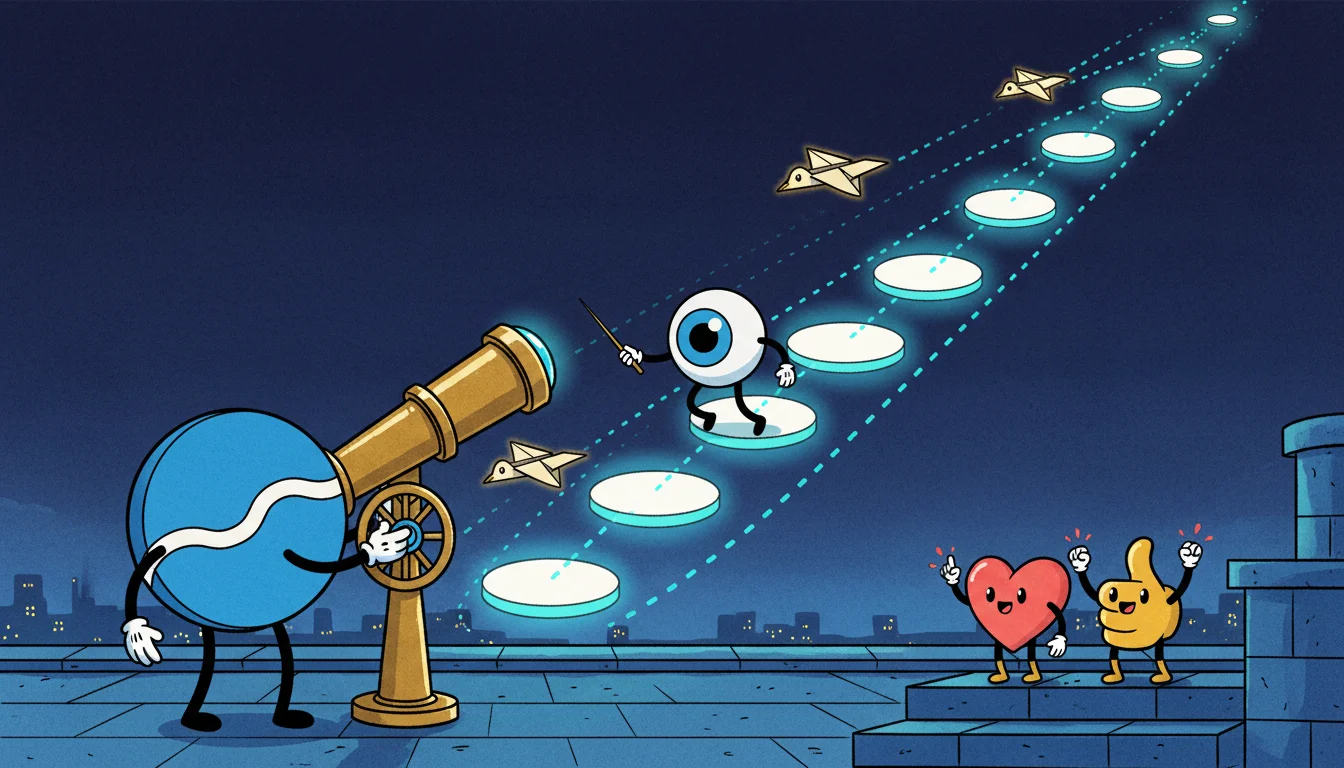
A successful video on TikTok travels through a roughly predictable sequence of cohorts:
| Cohort | Audience size | Trigger to next |
|---|---|---|
| Test pool | 200 to 500 | Strong completion + ratio |
| Local push | 5,000 to 50,000 | Sustained engagement signal |
| Niche FYP | 50,000 to 250,000 | Cross-niche resonance |
| Broad FYP | 250,000 to 2M | Continued strong engagement |
| Global FYP | 2M and beyond | Cultural pickup, shares |
Each step is a different audience composition. The test pool is similar to your existing audience profile. The local push expands geographically. The niche FYP cohorts pull from people who watched videos like yours. By the time a video hits the broad FYP, the audience composition is barely related to your account at all.
The implication is that a video has to clear different thresholds in different cohorts. A video that crushes inside your niche may stall at the cross-niche threshold because the broader audience does not connect with the topic. Most "viral" videos on TikTok died at the niche FYP stage and never made it to broad FYP. That is normal. A video that pulls 200,000 views inside your niche is a strong success, even if it never broke 1M.
The "200-view jail" creators talk about is the test pool failing at the very first hurdle. The video did not generate enough qualified views (5+ second views) and never got promoted out of the initial cohort. The fix is almost always the cold open, not the topic, the hashtags, or the time of day.
Personalization happens at the cohort level, not at the global ranking level. Two creators posting the same exact video will land in different test pools because their account-level profile is different. Two viewers watching the same FYP at the same time will get entirely different videos because their interaction history shapes which cohorts they sit in.
A few practical consequences:
- Showing your video to friends who follow you does not predict broader reach. Their cohorts are too narrow
- Reposting another creator's viral video on your account will not replicate their reach. Your test pool is different
- "Best time to post" advice is mostly a function of your specific audience's active windows. Generic time-of-day rules are noise
- The same video can flop on day one and pop on day three if the audience composition in the test pool shifts
The algorithm is not punishing you when a video flops, and it is not rewarding you when one breaks. It is matching content to viewer pools, and the match either lands or it does not. Treat the ranking as probabilistic, not personal.
Need a stronger account profile to start posts in better cohorts?
Real TikTok followers from real profiles, drip-fed and paced to your existing audience size.
TikTok does not officially confirm an account-level reputation score, but observable behavior strongly suggests one exists. Accounts with consistent strong-performing content start posts in larger test pools. Accounts that have been posting low-completion content for weeks start posts in smaller test pools. The effect carries across videos, not within a single post.
Signals that appear to feed the account-level profile:
- The trailing average watch-completion rate across the last 7 to 14 days of posts
- The trailing average engagement ratio (likes-per-view, shares-per-view)
- Posting cadence consistency
- Niche coherence (does the content cluster around a definable topic)
- Compliance history (no community-guideline strikes)
- Follower-to-engagement match (do followers actually engage with new posts)
A new account in 2026 takes roughly 5 to 8 posts to establish its baseline profile. After that, every post is being weighed against the trailing average. This is why creators who post one breakout video and then 20 weak follow-ups see their reach degrade across the board. The breakout did not permanently lift the account; the weak follow-ups dragged the trailing average down.
The corollary is that the fastest way to lift account-level reach is to stop posting weak content. A 3-week pause to plan stronger videos beats 30 mediocre posts in the same window. The algorithm is averaging the recent past; thin out the recent past, and the average improves.
According to Hootsuite's TikTok algorithm breakdown, high-quality videos receive 72 percent more watch time per view and substantially higher follower-conversion rates than baseline content. Hootsuite also notes that videos with background music get an average of 98 percent more views than those without, which functions as a very practical baseline lift on the content-information signal.
TikTok does not have a "shadowban" in the strict sense. Accounts whose posts suddenly stop reaching are usually experiencing one of three things:
- A trailing-average reset after a streak of weak content
- A community-guideline soft strike that throttles reach for 48 to 72 hours
- A shift in cohort composition because the niche audience moved on
The "permanent shadowban" is mostly creator folklore. Reach drops are real, but they are almost always recoverable. The recovery formula is consistent:
- Audit the past 7 days of posts for community-guideline edge cases (mild violence, medical claims, sexual content, suspicious external links)
- Pause for 48 hours if a borderline post was made
- Post 3 to 5 high-completion videos in the same niche
- Watch the trailing average rebuild
Accounts coming out of throttling typically see reach normalize inside 5 to 10 posts, not weeks or months. If reach has been flat for over 30 days and none of the above resets help, the issue is content quality, not the algorithm.
Followers used to be a primary algorithmic signal. They are not, in 2026. TikTok does not push your post to your followers in the same way Instagram does; only a fraction of your followers ever see any given video, even when the post performs well in the FYP.
What followers do still influence:
- The size and composition of your initial test pool
- The cohort match for your test pool (followers shape who the algorithm thinks watches your content)
- Brand-deal eligibility and the visible social-proof number
- Search visibility and discoverability for your username and niche
A creator with 500,000 followers will start posts in larger test pools than a creator with 5,000, holding everything else equal. The follower count is not an output the algorithm cares about; it is an input to the test-pool sizing.
This is why follower-count growth still matters even though TikTok does not push posts to followers directly. The follower count shapes the starting cohort, and the starting cohort shapes whether a video has any chance of clearing the threshold to the next pool.
A breakdown of how follower-count growth lines up with cohort sizing, plus the package sizes that match different account stages, lives on the Buy TikTok Followers page. The pacing rules apply the same way they do for likes: real-profile delivery, drip-fed across hours or days, sized so the follower curve does not look like a step function the algorithm flags.
For creators looking at the engagement-signal side too, the Buy TikTok Likes page covers how the like-to-view ratio interacts with cohort progression once a video starts climbing.
The TikTok algorithm is a watch-time optimizer with a personalization layer on top. The signals are public. The hierarchy is documented. The cohort cascade is observable. None of it is mysterious once you separate the signal layer from the routing layer.
What that translates to for your next video:
- The hook is the test-pool gate. If the first 2 seconds do not earn the next 3, nothing else matters
- Watch completion clears the early thresholds. Saves and shares clear the cohort jumps later
- Account-level history shapes where the video starts. Stop posting weak content if you want stronger starts
- Followers shape the initial cohort match. They are still a sizing input, even though the algorithm does not push posts to followers
The accounts that compound on TikTok are the ones whose every post pulls the trailing average up. No single video has to be a breakout. The system rewards consistency at the watch-completion level, and the cohorts handle the rest.